
Mulch
what is it and why does it benefit the garden?

A few weeks ago my mind was full of mulch. Here in the Northern Hemisphere, Summer is beginning and I knew Summer Solstice was coming and bringing the longest, hottest days of the year. Today as we move through the Summer Solstice portal, my home is cloaked in misty rain, and I rest assured that my garden’s soil is sponging up the moisture, and the mulch I have laid will help protect it from the coming heat.
This is a guide to mulch - what is it and why does it benefit the garden? Below you will also find a photo journal of the recent herb garden project I worked on with a group of Permaculture students.
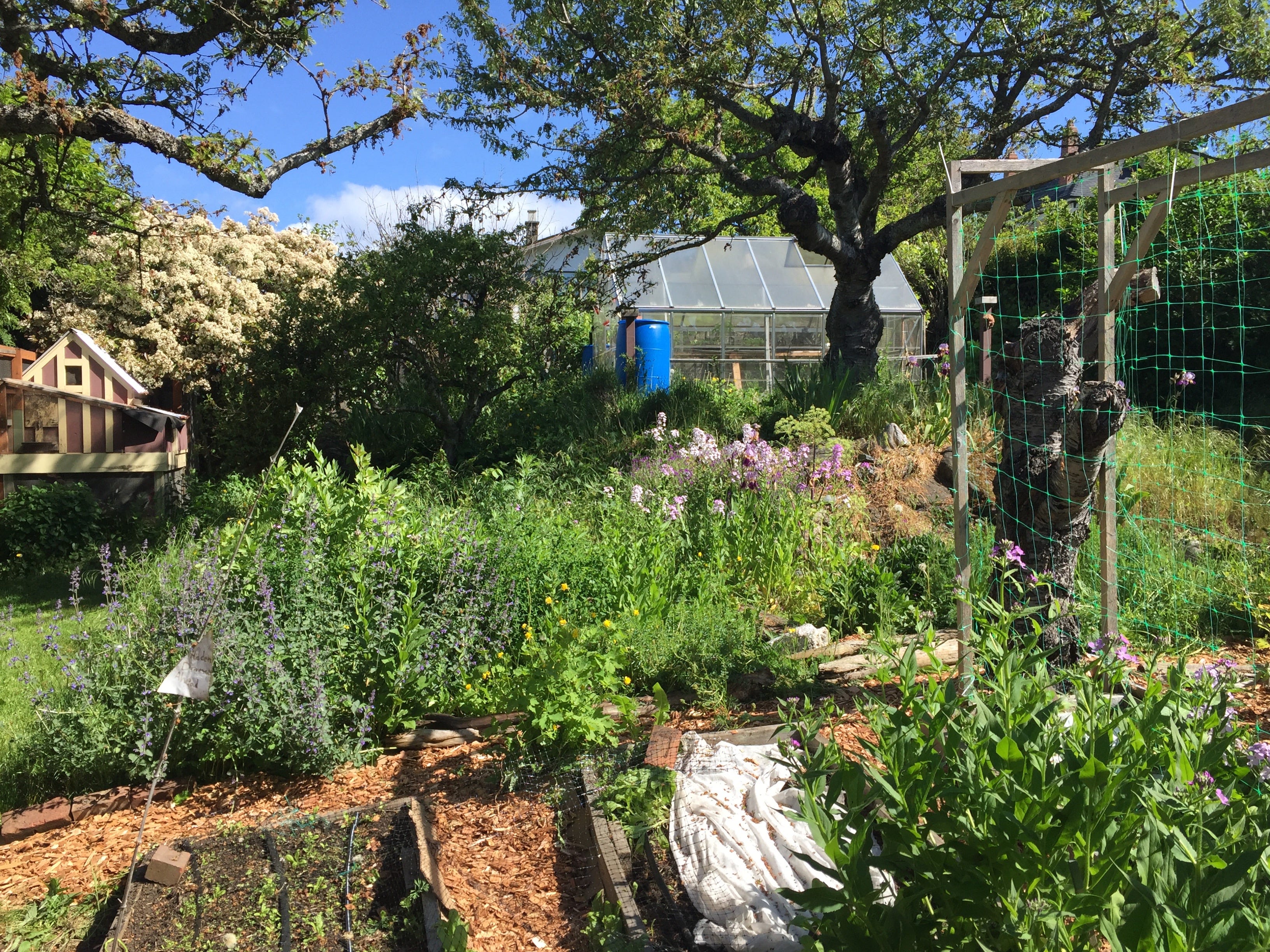
In my region we’ve been noticing drier summers for the past few years and the loss of numerous trees and shrubs show me that we need to be more proactive about managing our water resource. There are numerous ways to approach this, including rainwater catchment, and timing our garden watering schedule….and mulching. One of the best ways we can store water is in the soil. Protecting soil from direct sun exposure prevents excess evaporation and mulch is the material we place on the soil to protect it.
You can use various materials to mulch depending on what is available to you in your region. Examples include: leaves (this is perhaps the least expensive and is very nutritious for the garden, just avoid black walnut), ramial wood chips (chips from the branches of hardwood / fruit trees), finished compost, bark mulch (avoid in excess), wood chips (avoid excess and use Cedar only for paths), straw (avoid hay due to seeds), kelp, seaweed (time your seaweed harvest to consider that it may be habitat for spawning fish at certain times of the year), pine needles, newspaper, cardboard, cotton, wool, seedless grass clippings, etc.
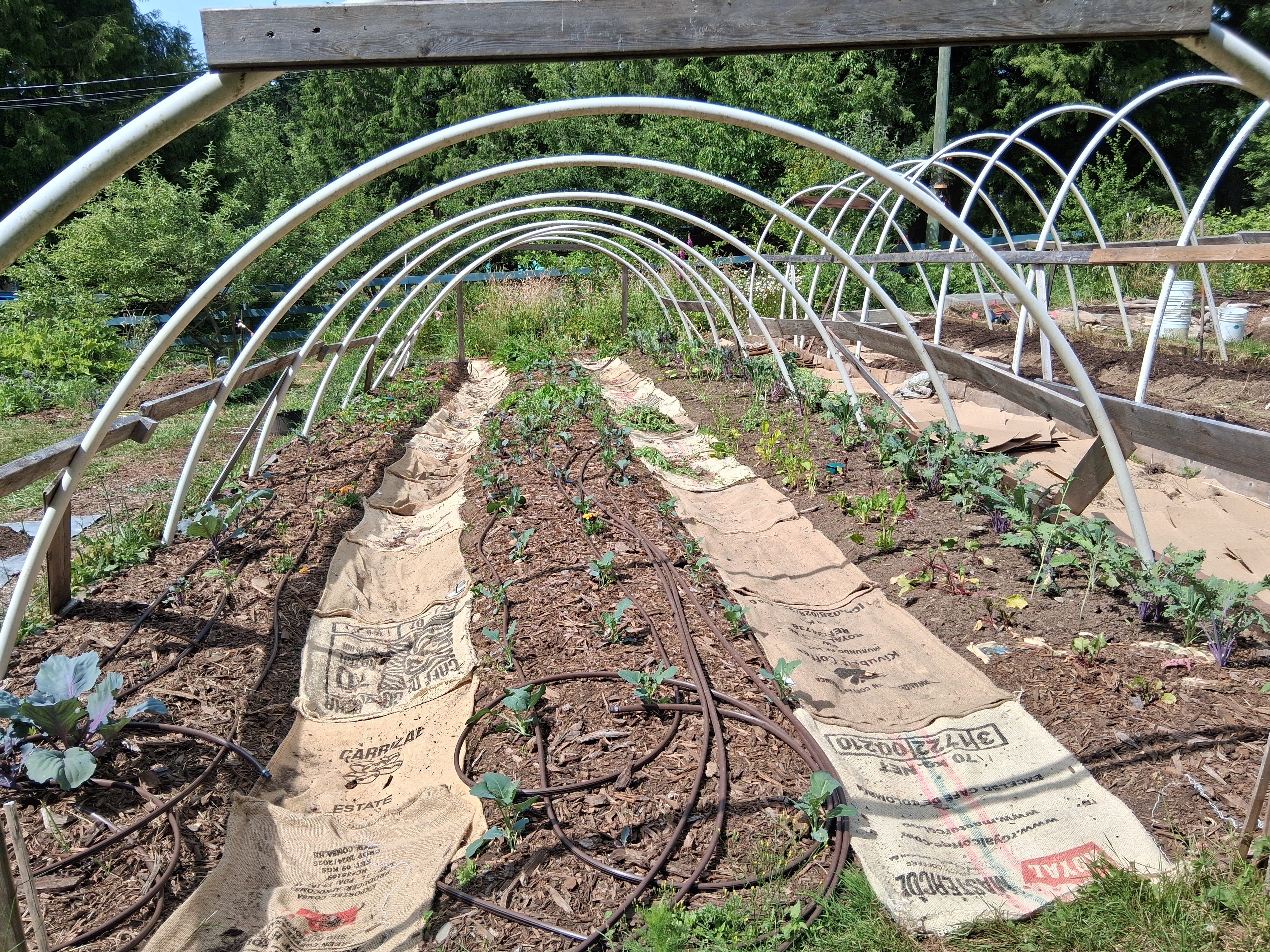
Aside from protecting soil from water loss via evaporation during drought, mulch can protect soil from compaction during heavy rain, offer protection from frost, prevent weeds from germinating, and provide habitat for beneficial insects. Note that it can also provide habitat for slugs, so a tip (from Linda Gilkeson, author of Backyard Bounty, who has been gardening for longer than I’ve been alive!) is to rake off mulch applied over winter in the spring and then reapply it for summer. That removes the habitat during slug breeding season but ensures you have mulched for the key months of winter and summer.
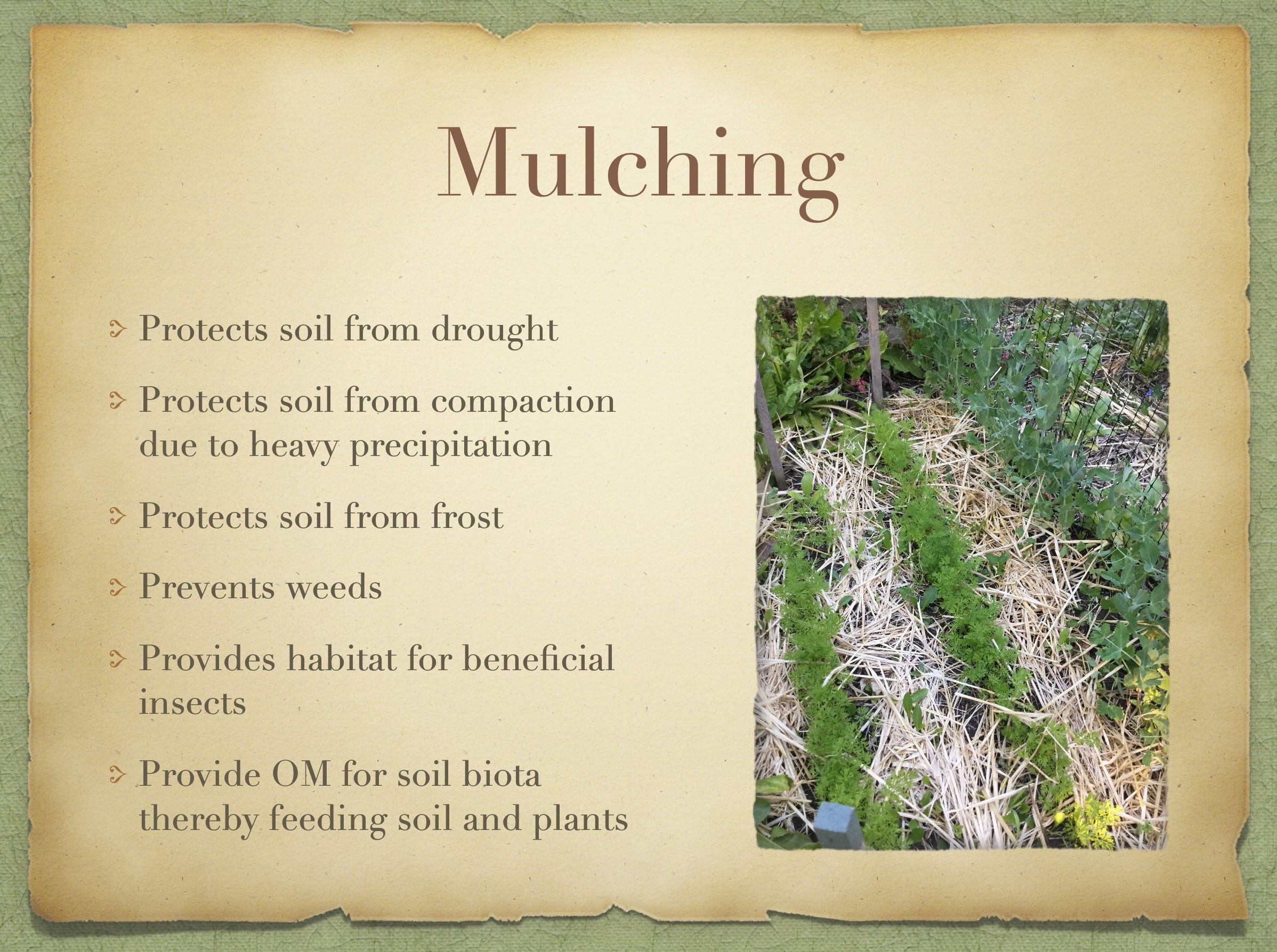
Mulching with decomposable materials also provides organic matter for the soil-food-web. This provides further benefits for the garden plants and the broader ecosystem, and also helps to support a healthy soil structure which will retain moisture better in the future.
Healthy soil contains:
Air / space (25-40%)
Water (15-25%)
Soil particles / Minerals (30-45%)
Organic Matter (3-15%)
Biota (12%)
Air is required for aerobic bacteria that break down organic material in soil and makes its nutrients available to plants. Compacted soil has little space for air and is not supportive of plants roots.
Water is required by plants to live and to absorb nutrients. It is also required for many of the other organisms living in the soil.
Minerals in soil include macronutrients needed in larger quantities (potassium, phosphorous, nitrogen, calcium, sulphur, magnesium. Micronutrients are required in lower quantities, and include iron, boron, copper, chloride, manganese, molybdenum, and zinc.
Organic matter includes dead plant material and animal material (including manure). Organisms in soil break down organic matter and make the nutrients available to plants. Organic matter also changes soil structure affecting water retention and drainage and aeration.
Biota in soil includes a wide variety of microscopic and macroscopic species including: snails, nematodes, beetles, worms, bacteria, and fungi. Biological activity in soil is essential for healthy soil and therefore healthy plants. The life processes of biota in the soil create inorganic molecules that are accessible as nutrients for plants. Also, the physical activity (tunnelling) of biota as well as their wastes and secretions affect soil structure and therefore aeration and water drainage.
We can also consider mulching with living mulch, “green mulches”, or sheet mulching.
Living mulch: low lying plants serve as ground over to protect the soil and retain its water (examples of living mulches: thyme, chickweed, purslane, lady’s mantle). Consider appropriate species for your regional ecology as ground covers can have a spreading habit. You may find a great local species that serves this role in your native ecosystem.
Green Mulches: referred to as “Chop and Drop”, nutritious plants’ leaves and stems are cut and placed as mulch. Ideal plants: Comfrey, Dandelion, Lamb’s Quarters, Chickweed, Yarrow, Parsley, or anything that grows an abundance of leaves. These plants are often called dynamic accumulators in permaculture as they are great at extracting and bringing nutrients into their bodies, making the nutrients accessible at soil surface for decomposition and nutrient cycling.
Sheet Mulching
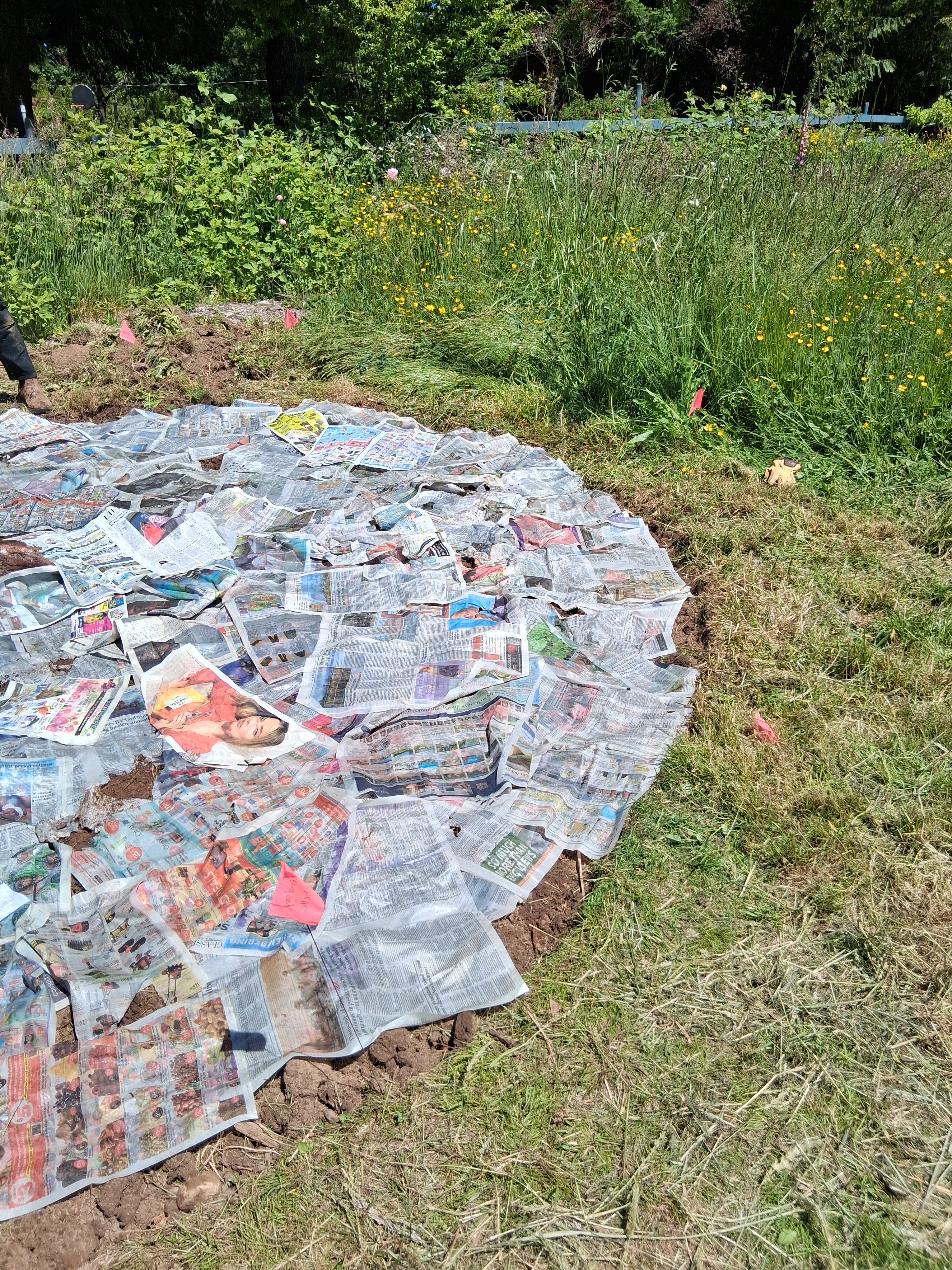
Sheet Mulching: layering organic matter on the soil surface to prepare earth for garden planting or as support around a fruit tree. Typically a barrier layer of cardboard is used to block out light from underlying plants and their seeds, with organic matter above and ideally below as well.
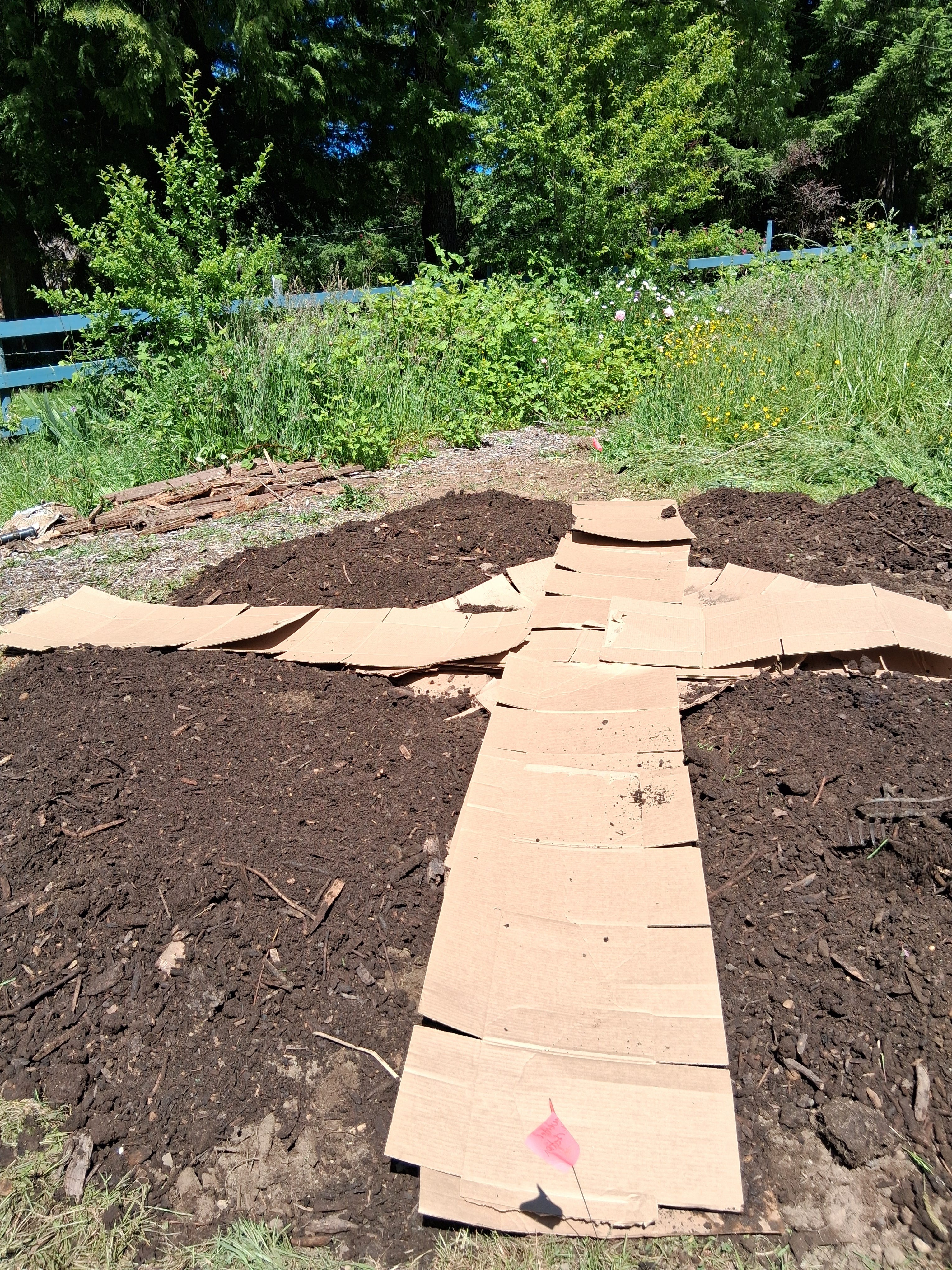
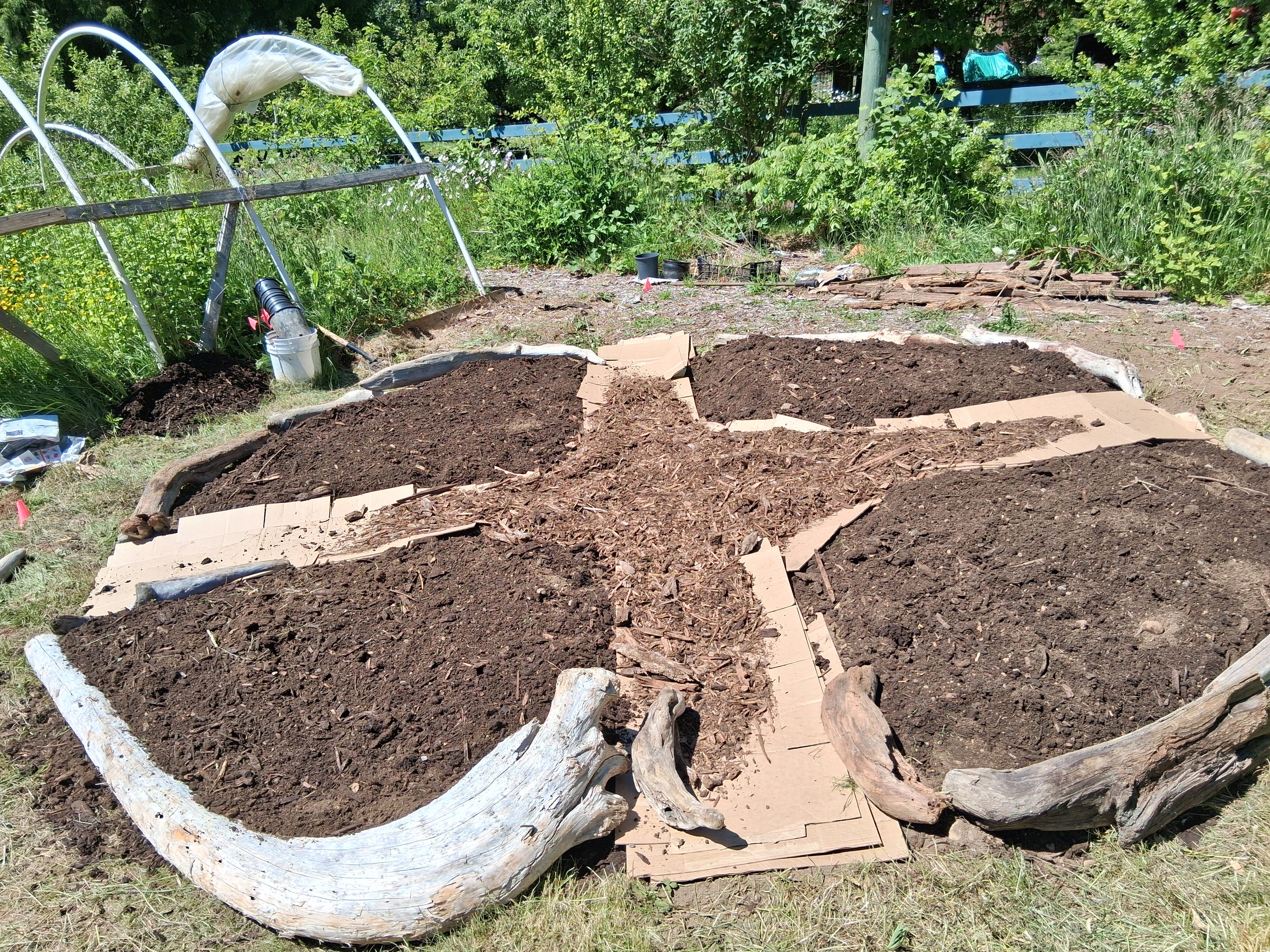
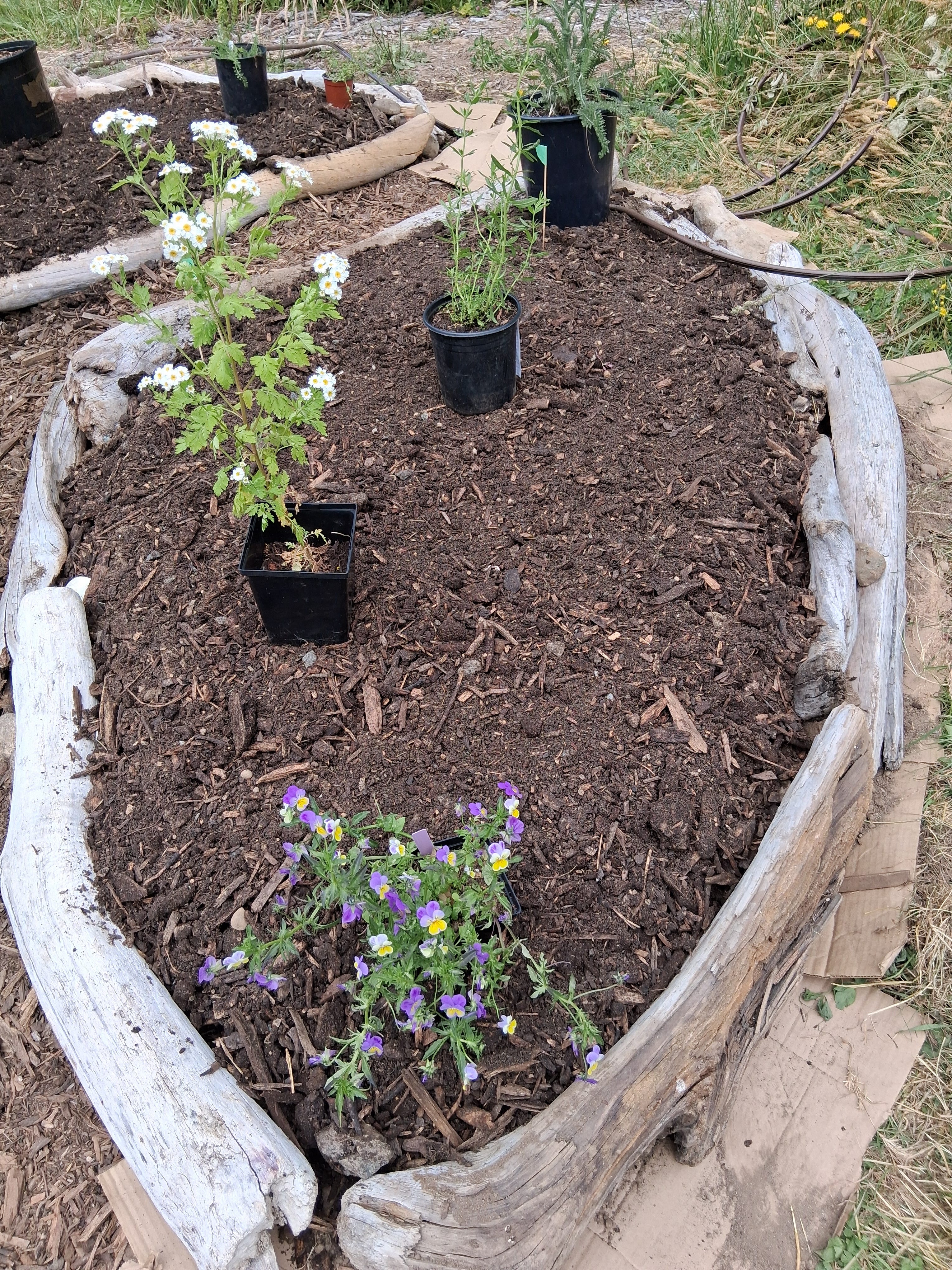
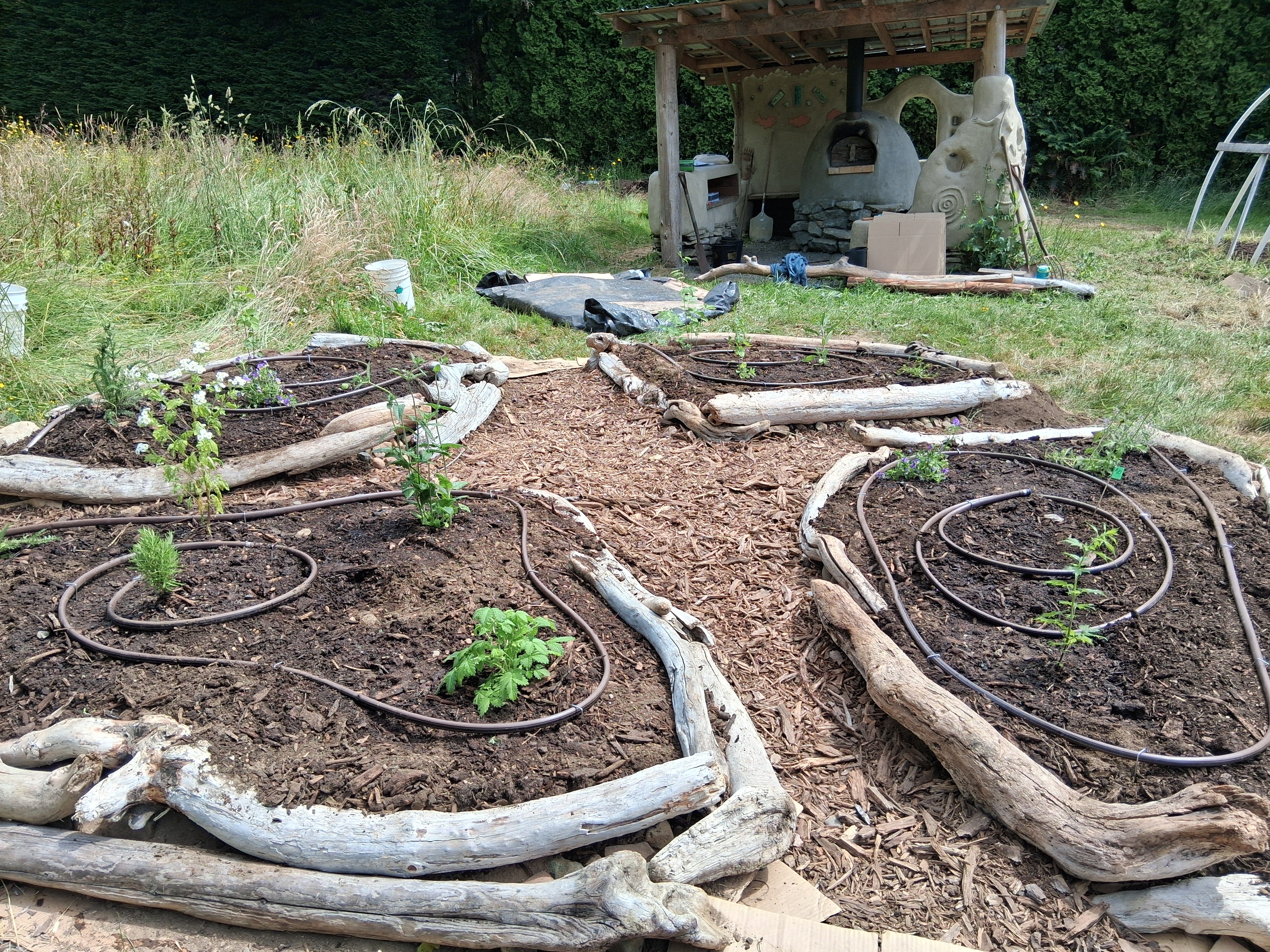
I recently worked with a group to create a new herb garden using a sheet mulch. We started by breaking up the native soil with pitch forks. Then we lay newspaper, wetted it to draw up worms, layered on soil and manure mulch, then added cardboard, more soil and manure mulch, and finally a rich blend of finished compost, mushroom manure, and fish compost at our planting sites. We used 3 layers of cardboard for pathways and topped that with wood chips. What follows is a brief photo journal of the process.
Some resources I have appreciated and suggest for learning more about soil, water, and permaculture:
Bloom, Jessi, and Dave Boehnlein. Practical Permaculture. Timberpress, OR, 2015.
Compost Education Centre. www.compost.bc.ca.
Hemenway, Toby. Gaia’s Garden. 2nd ed. Chelsea Green Publishing, VT, 2009.
Hermary, Heidi. Working with Nature: Shifting Paradigms. Gaia College Inc., BC, 2007. (and associated curriculum from Gaia College)
Ingham, Elaine. Various resources including: https://www.soilfoodweb.com
Backyard Bounty, by Linda Gilkeson, also check out her website: http://www.lindagilkeson.ca/
Brad Lancaster’s videos on water, for example:
https://www.harvestingrainwater.com/video/water-harvesting-demo-with-brad-lancaster/
Check out his laundry shack (and other systems):
https://www.harvestingrainwater.com/media/videos/
The Permaculture Garden, by Huw Richards. I just cracked this book and it looks great, plus
is here on Substack.I also learn a lot from direct observation of the soil and plants, and from the students I work with and my colleagues, with particular gratitude to Delvin Solkinson for collaborating on the project shown above and gifting me Huw’s book so I can keep learning!
You can check out Delvin’s work (along with his wife Grace and other collaborators here: https://www.permaculturedesign.earth/permaculturedesignnotes
Thanks for reading and learning with me!
All photos taken by me. All words human created.
this is so awesome! I shared it with my mom who is just learning about mulch. What is your favorite drip line? My beds aren't irrigated and it feels daunting because the last 2 systems I put in didn't work well